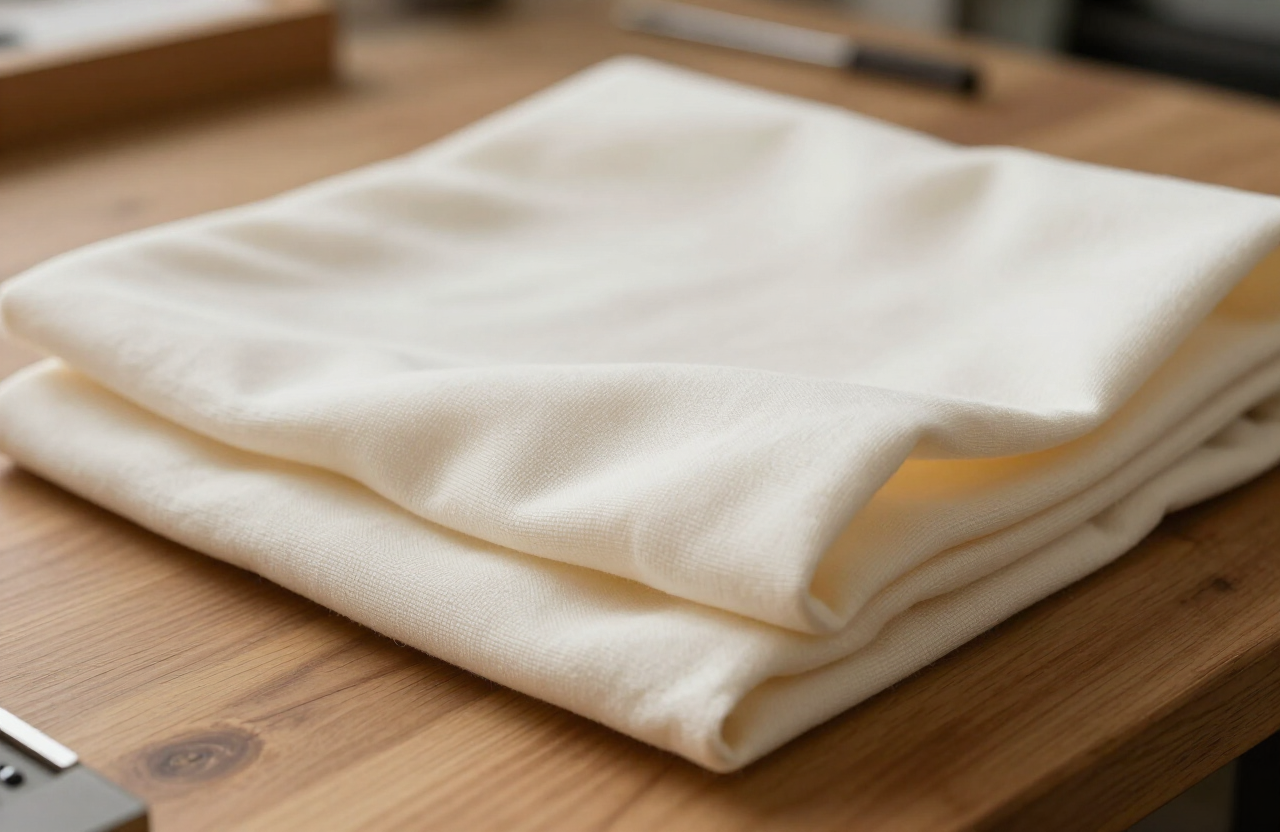
Run a hand across an ordinary t-shirt and then across a pima cotton one, and the difference is immediate. One is adequate. The other is a small daily pleasure. The reason is not marketing — it is fiber length.
The case for long-staple cotton
Cotton is graded by the length of its fibers. Short-staple cotton, the kind used in most mass-produced tees, produces a fuzzy, weak yarn that pills and loses shape. Pima cotton is a long-staple variety: its fibers are nearly twice as long, so the yarn is smoother, stronger, and finer. The result is a fabric that drapes cleanly, feels buttery against the skin, and stays that way wash after wash.
What you actually notice
- A softer hand feel that improves with washing rather than degrading.
- Less pilling — those small surface balls that cheap cotton develops within weeks.
- Better drape, because the finer yarn falls more cleanly over the body.
- Color that holds, because smooth fibers take and keep dye more evenly.
“The fiber is the foundation. You can have the best cut in the world, but if the cotton is ordinary, the shirt will always feel ordinary.”
Why Brezius uses pima
Every Brezius tee — from the Pima Pocket Tee to the full t-shirt collection — is cut from long-staple pima cotton. It costs more to source, and it should. The whole premise of the brand is that a tee can be a kept object, not a disposable one. Pima is what makes that premise honest.
If you have ever wondered why one plain tee becomes the one you reach for first, every time, while another sits folded at the back of the drawer — the fiber is almost always the answer.